
The Best AI Customer Service Agents in 2026: An Honest Comparison
Every roundup wants to crown a single winner. The truth is there isn't one, and which agent is best depends entirely on the help desk you already run. Here is the honest map.
📋 On this page
- More than a fancy FAQ
- The four things that actually matter
- The upside, and where hype breaks
- Native to your help desk or CRM
- Standalone resolvers, on top of your stack
- Enterprise white-glove builds
- Voice-heavy and ecommerce specialists
- Omnichannel and social-first platforms
- The comparison, side by side
- The pricing models matter more than the price
- Buy a platform, or build one you own
- Common questions
Search for the best AI customer service agent and every result confidently hands you a number one. The catch is that they rarely agree, and the one they crown is often the one that paid for the review, or the one the author happens to sell.
I build and integrate these systems for a living, so here is the version without a favourite to push. There is no single best AI customer service agent in 2026. The right one depends on the help desk you already run, the systems it needs to reach, and how predictable you need the bill to be. The good news is that once you group the field by who each tool is actually for, the choice gets a lot clearer.
One caveat before the names. This is a fast-moving, consolidating category. Prices shift, features ship monthly, and a couple of the players have changed hands in 2026, so treat everything here as a snapshot and confirm the current details before you sign anything.
More than a fancy FAQ
Worth being clear on the word "agent" before we compare them, because the market is full of old chatbots wearing the label. Gartner even coined a term for it, agent washing, after estimating that only a small fraction of the vendors claiming agentic AI actually had it.
A real AI customer service agent does three things a scripted chatbot cannot. It reasons through a request rather than matching keywords, it takes action by reaching into your systems, and it orchestrates a multi-step job to the end, asking for clarification or handing off when it needs to. The practical test is blunt: if it cannot actually issue the refund, change the order, or reset the account, and can only point you at a help article, it is a fancy FAQ, not an agent. In practice a real one handles things like order status, refunds, account and address changes, subscription updates, first-line troubleshooting, and appointment booking, end to end. We unpack how that works in our guide to AI customer service agents.
The four things that actually matter
Before any brand name, judge every option on the same four things. Get these right and the shortlist writes itself. Ignore them and a slick demo will do your thinking for you.
Grounding. Does it answer from your real content, or from a general model that will confidently invent a policy. An AI answer is only as good as the knowledge it reads, so the agents worth having retrieve from your approved material and can admit when they do not know. This is the whole idea behind a RAG chatbot, and it is the difference between a support asset and a liability.
The handoff. When the agent hits its limit, does it escalate cleanly to a human with the full context, or trap the customer in a loop. As covered in our guide to AI customer service agents, the quality of that handoff matters more than the raw resolution number.
System access. Can it actually reach your order system, your CRM, your billing, and take an action, or is it limited to answering questions. Resolving a ticket usually means doing something, not just describing how.
The pricing model. Not the sticker price, the model. Whether you pay per resolved outcome, per conversation, per session, or on an opaque enterprise contract changes your real cost more than the headline rate does. More on that below, because it is where the surprises live.
The upside, and where the hype breaks
Done well, the upside is real. Gartner expects agentic AI to autonomously resolve roughly 80% of common customer service issues by 2029, with around a 30% cut in operational costs, and McKinsey has put the customer-experience gains in the range of 15 to 20% higher satisfaction. Instant answers around the clock, and a support team freed for the cases that need a person, are the genuine wins.
Now the part the glossier roundups leave out. Gartner also expects more than 40% of agentic AI projects to be scrapped before 2027, and around half of the companies that cut support headcount for AI to quietly rehire, because the technology is not yet mature enough to replace human judgement wholesale. Klarna is the cautionary tale everyone points to. The lesson is not that the technology fails, it is that projects fail, on messy data, vague success metrics, weak governance, and underestimated integration. Which is precisely why the four things above matter more than the logo on the box.
Native to your help desk or CRM
If you already run a major support platform, the path of least resistance is its own built-in agent. No separate tool to integrate, one bill, one place to work. The trade-off is that you are buying further into that ecosystem.
Best if you run Zendesk
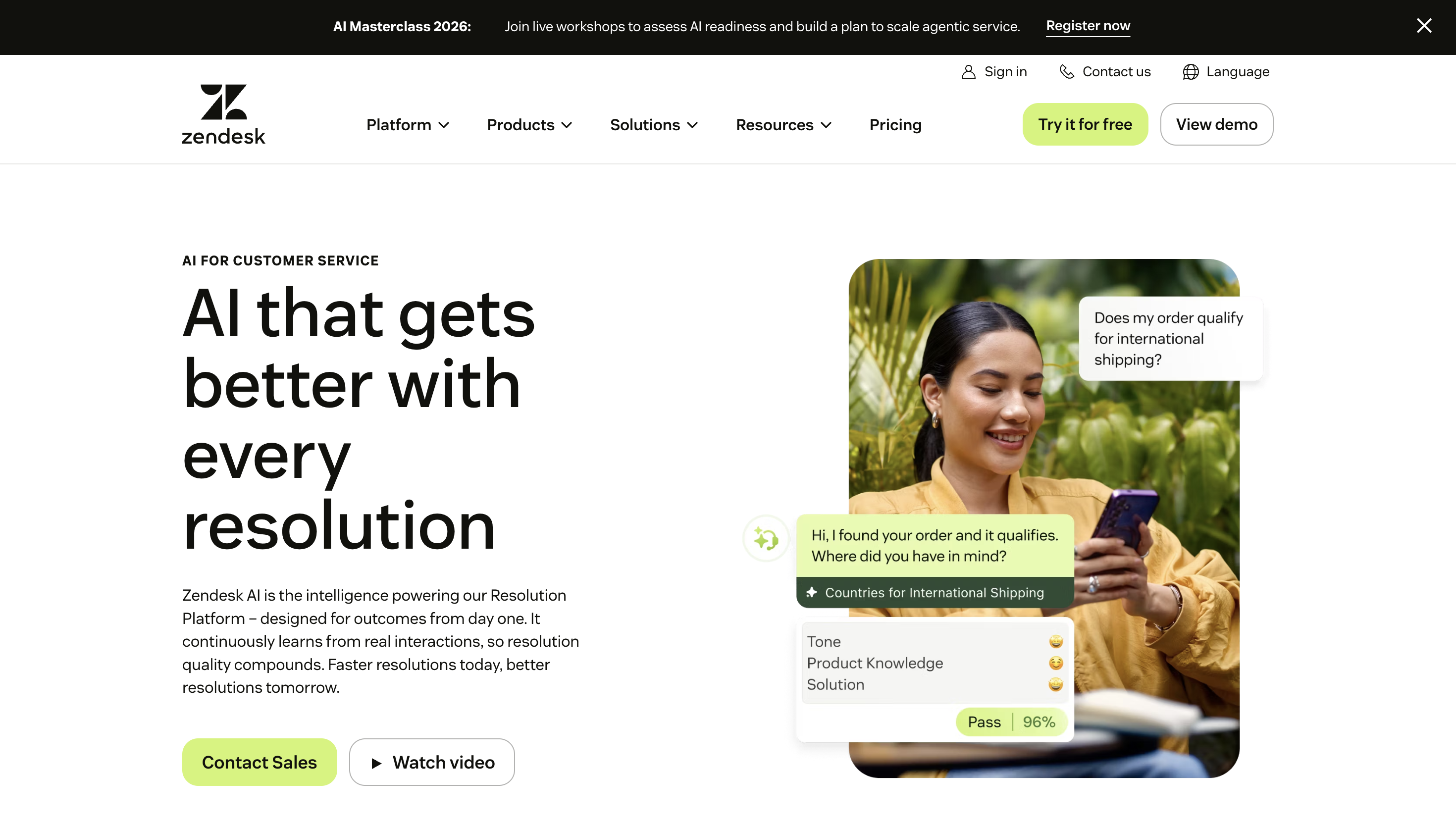
Zendesk AI
Zendesk's own AI layers into its ticketing suite: automated triage, suggested replies for your agents, and autonomous resolution of routine questions, all inside the workspace your team already uses. It is the obvious start if Zendesk is the centre of your support, with no migration required. Pricing is typically an add-on to the Zendesk suite, on a per-resolution basis, so watch the overage as volume grows.
Best if you run Salesforce
Salesforce Agentforce
Agentforce is Salesforce's AI agent layer for Service Cloud, and its edge is context: it sits on your CRM data, so it sees customer history, account details, and past cases, and can take actions inside Salesforce workflows. The natural pick if service, sales, and data already live in Salesforce. The flip side is cost and complexity, it generally leans on Data Cloud, expects Salesforce expertise to configure, and its per-conversation model can add up. Expect a real implementation, not a switch you flip.

Best if you run Freshworks
Freshworks Freddy
Freddy is Freshworks' bundled AI for Freshdesk, and its appeal is simplicity and a low per-session cost. For teams already on Freshworks who want AI without adding a vendor, it is the sensible default. As with the others here, the value is highest when you are already committed to the platform underneath it.

Standalone resolvers, on top of your stack
These are AI agents that work on top of the help desk you already run, connecting by integration rather than asking you to migrate. They tend to be the strongest pure resolvers, and they are the right call when you like your help desk but want a better AI layer than its native one.
Best all-round resolver
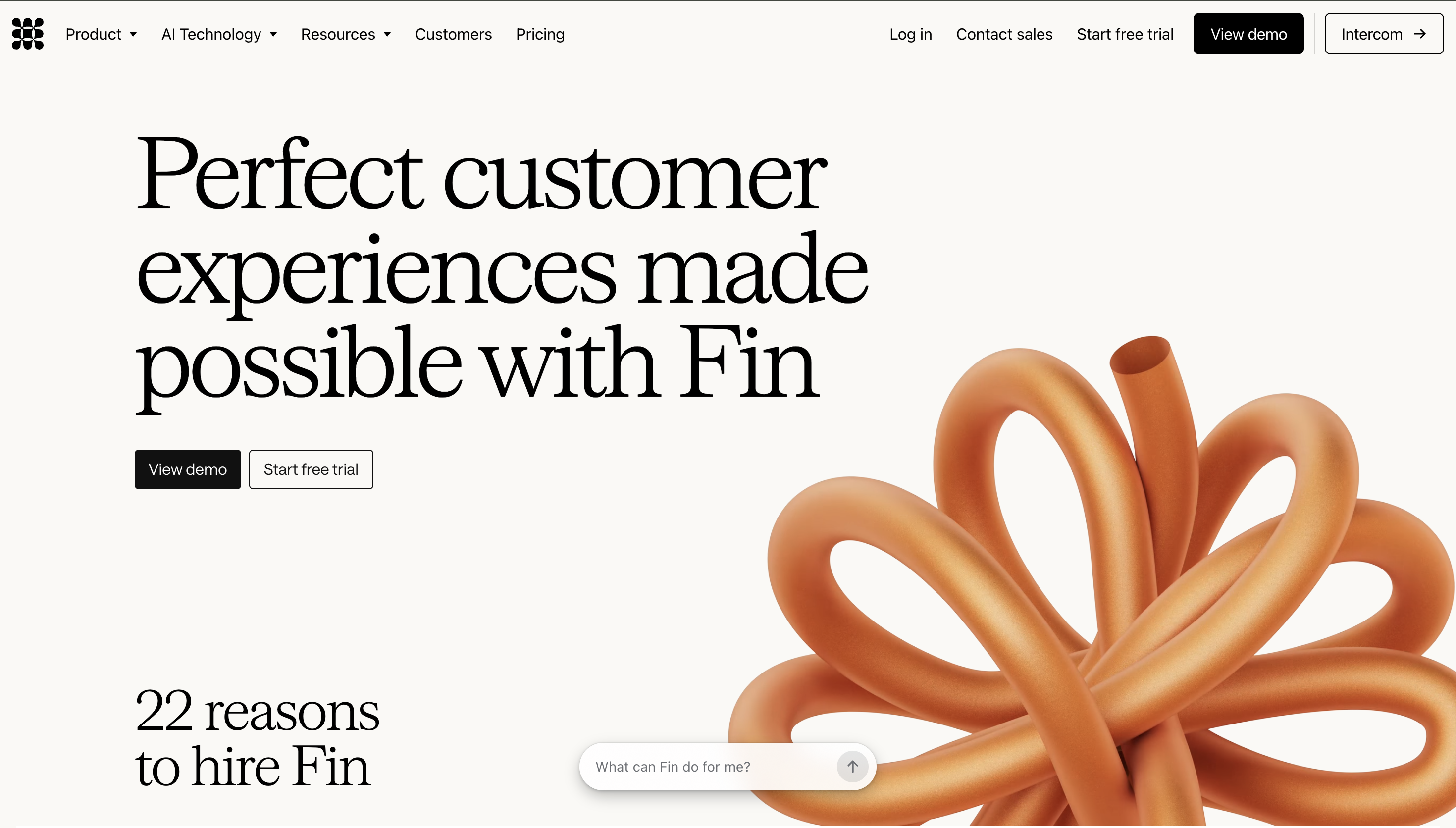
Intercom Fin
Fin has become the reference point in this category, and for good reason. It works with existing help desks like Zendesk, Salesforce, Freshdesk, and HubSpot, or most deeply with Intercom's own, and it is genuinely self-serve, a non-technical support team can configure it, test changes, and go live quickly. Its pricing is refreshingly transparent for this space: roughly a dollar per resolved outcome, so you pay when it actually solves something rather than for every attempt. If you want one strong default to benchmark the rest against, this is it.
Best for high-volume, multilingual
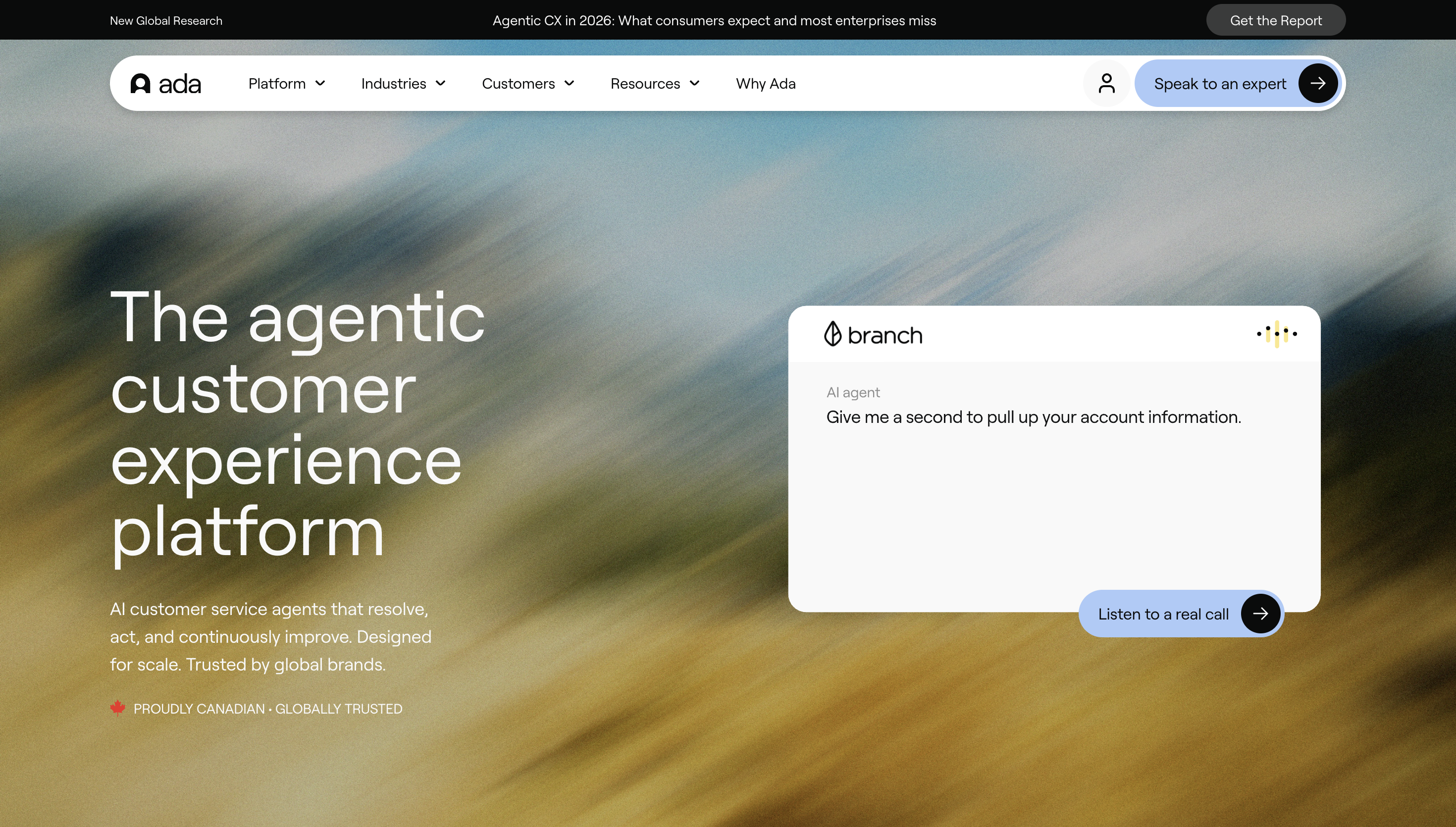
Ada
Ada is an established, automation-first agent aimed at maximising the share of inquiries resolved without a human, with very broad language support that makes it a fit for large, global brands. It sits on top of your existing help desk and is a mature enterprise option. Pricing is consumption-based and not published, with third-party estimates in the low single digits per resolution and enterprise contracts to match, so it is a procurement exercise rather than a quick sign-up.
Enterprise white-glove builds
At the top end sit platforms built for large CX organisations that want a heavily managed, bespoke agent and can fund it. These are not self-serve. They are multi-month, vendor-led engagements with quote-only pricing that generally runs into six figures a year.
Premium consumer brands
Sierra
Sierra, from founders with serious pedigree, targets large consumer brands that want a polished, governed, branded agent and a vendor to build it with them. Expect strong simulation-based testing, real governance controls, and an implementation measured in months rather than days, with engineering resources involved. It sits above your existing CX systems rather than replacing them, so you keep a separate help desk underneath. Powerful, and priced accordingly.

Configurable enterprise resolver
Decagon
Decagon is Sierra's closest peer: an enterprise agent platform with a high-touch, concierge implementation and a focus on autonomous, end-to-end resolution across channels. It suits large teams that want deep workflow customisation and hands-on onboarding, and have the engineering to run an agent-only platform alongside their help desk. Like Sierra, pricing is custom and opaque, with a substantial annual platform fee. Worth noting that compliance coverage varies at this tier, so if you are in a regulated field, confirm the specifics for your requirements rather than assuming.

Voice-heavy and ecommerce specialists
Two kinds of business are better served by a specialist than a generalist: those whose support is mostly phone calls, and online stores whose questions are all orders and returns.
Contact centres and voice
kore.ai, NiCE Cognigy, Omilia, SoundHound, PolyAI
For large, voice-heavy contact centres, platforms like kore.ai and NiCE Cognigy are built for deep telephony, scale, and the compliance frameworks regulated industries need, at enterprise prices and with real implementation effort. Omilia and SoundHound, which now runs the former Amelia platform, are strong voice-first specialists in the same space, and PolyAI focuses specifically on natural-sounding phone support that replaces clunky menu systems. If most of your support comes in by phone, this is also where our own guide to AI voice agents is the more relevant read.

Shopify and online retail
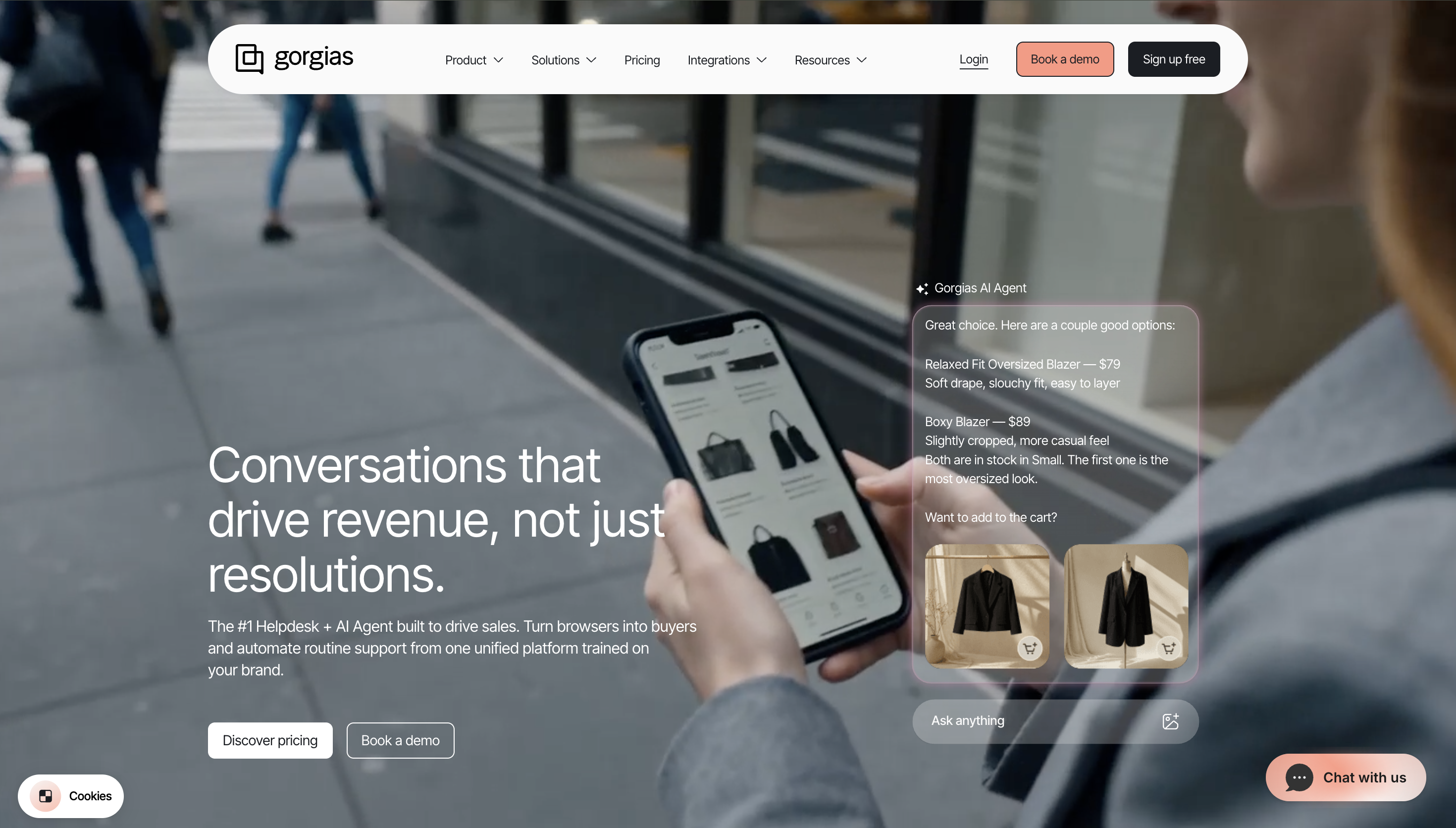
Gorgias
Gorgias is built around ecommerce, with tight Shopify and BigCommerce integration and automation tuned for order status, returns, and shipping questions, the bulk of any store's support volume. For online retail it tends to beat a generalist on fit, and its per-resolution pricing is competitive. If you sell online, pair this thinking with our take on an AI chatbot for ecommerce.
Omnichannel and social-first platforms
Two more names worth knowing if your support is spread thin across many channels, or lives mostly on social media.
Omnichannel quick-start
Yellow.ai
Yellow.ai aims at fast deployment across chat, voice, email, and social from one place, with prebuilt workflows to get moving quickly. A reasonable fit for teams that want broad channel coverage without a long build. Its strongest presence is in Asia, so global teams should check regional coverage and the certifications they need before committing.

Social-first customer service
Sprinklr
Sprinklr folds AI agents into a wider unified customer-experience platform that also handles social listening and digital engagement, so it makes most sense when social media is your primary support channel and you already run Sprinklr for it. As a broad suite it carries heavier pricing and setup than a focused resolver, so weigh that against how much of the platform you will actually use.

The comparison, side by side
The short version of everything above, in one place. Pricing is approximate, vendor-set, and moving, so use it to compare models, not as a quote.
| Agent | Type | Best for | Pricing model (approx.) |
|---|---|---|---|
| Intercom Fin | Standalone or native | An all-round resolver on almost any stack | Per outcome (~$1 resolved) |
| Zendesk AI | Native | Teams already on Zendesk | Per resolution, suite add-on |
| Salesforce Agentforce | Native | Teams all-in on Salesforce | Per conversation / credits |
| Freshworks Freddy | Native | Teams on Freshworks, budget-minded | Per session (low) |
| Ada | Standalone | High-volume, multilingual enterprise | Consumption, quote-only |
| Sierra | Standalone, white-glove | Premium consumer brands | Enterprise contract (6 figures) |
| Decagon | Standalone, white-glove | Configurable enterprise resolution | Enterprise contract + platform fee |
| kore.ai / Cognigy | Contact centre | Large voice-heavy operations | Enterprise contract (6 figures) |
| Gorgias | Native (ecommerce) | Shopify and online stores | Per resolution (low) |
| Yellow.ai | Omnichannel | Broad channel coverage, quick start | Custom / tiered |
| Sprinklr | Suite (social-first) | Social-led customer engagement | Suite pricing, higher tiers |
| Custom build | Owned | Complex systems, regulated data, own it | Build + run, no per-resolution fee |
The pricing models matter more than the price
This is the part that catches people out, so it is worth slowing down for. The four pricing models in this market are not just different numbers. They shift the risk in different directions.
Same 100 conversations, same 60% resolution. Per-conversation pricing bills you for the 40 the agent did not resolve.
Per outcome, or per resolution. You pay only when the agent fully solves an issue. Cost tracks value, and an unresolved conversation costs you nothing. This is the friendliest model for a buyer, and it is why transparent per-outcome pricing has become a selling point.
Per conversation. You pay for every interaction the agent handles, whether or not it actually resolved anything. Here is the catch worth internalising: if the agent resolves, say, sixty percent of conversations, you are still paying full freight for the forty percent it failed and handed to a human. Per-conversation pricing quietly bills you for the misses.
Per session. You pay each time the agent engages, even if one issue takes several sessions. Usually cheap per unit, but the units can multiply.
Enterprise contract. An opaque annual quote based on volume, channels, and integrations, often with a hefty minimum. Common at the top end, and a procurement project in its own right.
Buy a platform, or build one you own
Underneath the whole list is a fork worth naming plainly, because the honest answer for a lot of businesses is not on the shelf at all. Every platform above meters you, per resolution, per conversation, or per contract, and rents you a system you do not own. That is a fine trade in plenty of cases. It is a poor one in others.
Buy a platform when
- Your support is fairly standardised
- Your knowledge base is already clean
- You run a major help desk or CRM it plugs into
- You want to be live quickly with minimal setup
- Your volume keeps the per-unit cost sensible
Build one you own when
- Customer data is scattered across several systems
- The agent must reach internal APIs and tools
- You handle regulated or sensitive data
- Escalation and authority rules are complex
- Support is high-volume and core, so per-resolution fees add up fast
This is not us being contrarian for the sake of it, independent comparisons keep landing on the same fork. When support is core and high-volume, a custom agent wired to your exact systems and knowledge, and owned rather than metered, can beat the platforms on both fit and long-run cost. That is the work we do: not another subscription, but an AI customer service agent built on a proper chatbot foundation, grounded in your content, connected to your stack, and yours to keep.
The short version
- There is no single best AI customer service agent. The right one depends on the help desk you already run.
- Already on a big platform? Start with its native agent. Like your help desk but want better AI? A standalone resolver like Fin or Ada sits on top.
- Enterprise white-glove builds (Sierra, Decagon) are powerful and six-figure. Voice-heavy and ecommerce teams are better served by specialists.
- Judge the pricing model, not the sticker. Per-outcome tracks value; per-conversation bills you for the misses too.
- If support is core, complex, or regulated, a custom agent you own can beat a metered platform on fit and cost.
Common questions
The bottom line
Ignore anyone who tells you there is one best AI customer service agent. If you already live in a big platform, its native agent is the sensible start. If you like your help desk but want a stronger AI layer, a standalone resolver like Fin or Ada sits neatly on top. If you are a large brand with the budget and patience, the white-glove builds are genuinely capable. And if your support is phone-heavy or ecommerce, a specialist beats a generalist.
But run the pricing model, not just the price, and be honest about whether renting a metered platform actually fits a support operation that is core, complex, or regulated. For a lot of those businesses, the better answer is an agent built around their own systems and owned outright. If that sounds like you, that is exactly what we build.